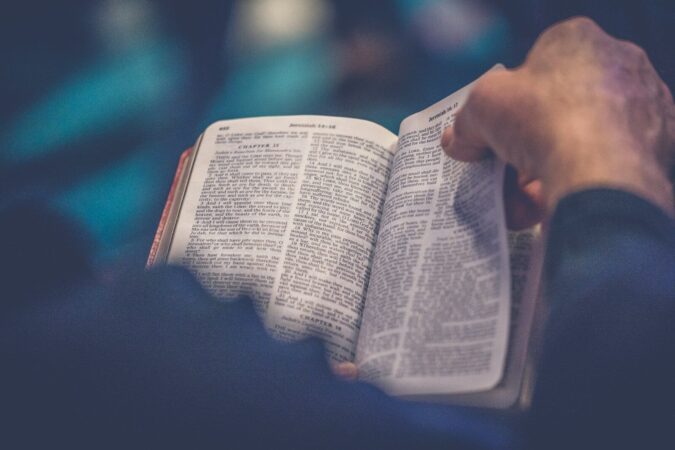

Scripture: Matthew 5:3–12
The world usually thinks the blessed are the rich, healthy and successful. In the Sermon on the Mount, Jesus gives a completely different definition of who is blessed. This sermon walks through the eight Beatitudes in Matthew 5:3–12. Scripture quotations are from the Berean Standard Bible (BSB).
Key verse: “Blessed are the poor in spirit, for theirs is the kingdom of heaven.” (Matthew 5:3)
Contents
ToggleIntroduction
Every human being is born into this world, created by God in a wonderful form that no one but He could make. Living in this world, everyone seems to struggle to survive. Some are fortunate to be rich and prosperous; others work from dawn to dusk and still live in poverty, without enough food or clothing. Some are extremely wealthy, yet seek death. Meanwhile, many who are neither rich nor poor live at ease. So in this life, who is truly blessed?
We find the answer in Jesus’ Sermon on the Mount, in the Beatitudes. It is a short teaching that condenses the meaning of “blessed” into just ten verses.
I. Blessed Are the Poor in Spirit and Those Who Mourn
First, what does “blessed” mean here? For people of the world who do not yet know God, blessing means many children, a full wallet, a big house, a social position as a doctor or engineer, an important government office, being honored by others. In the feudal era of our Vietnamese history, blessing meant being a king or a court official, holding power over life and death, with a palace full of concubines. That was the royal idea of blessing in ancient dynasties.
Many Vietnamese today still keep an age-old custom. At the very first hour of the Lunar New Year, people go out to pick “spring buds” for luck, visit pagodas, draw fortune sticks and choose an auspicious direction for their first outing. They prepare good wishes for the first people they meet.
Brothers and sisters, do those wishes actually come true for us? Certainly not. They are social courtesies, a beautiful part of our culture in speech and greetings. But they are not the source of blessing that God’s people seek or hope for.
For Christians, the children of God, blessing is completely different. It is the blessedness of a peaceful life, content in God’s law. Blessing does not lie in wealth or poverty, high or low status, beauty or plainness. Blessing is the hope of entering heaven, the assurance of salvation through Jesus. Like everyone else, we work to live and we get sick. But God’s children are still blessed, because in every event God is present, loving, providing, caring for and helping us. This blessing is received only by God’s people who truly trust Him. To be blessed is to refuse to join the wicked in doing evil, to refuse to sit with mockers, and instead to love learning God’s Word and live by His law. The first Psalm makes the meaning of blessing very clear:
Blessed is the man who does not walk in the counsel of the wicked, or set foot on the path of sinners, or sit in the seat of mockers. But his delight is in the law of the LORD, and on His law he meditates day and night.
(Psalm 1:1–2)
1. Blessed are the poor in spirit, for theirs is the kingdom of heaven (v. 3)
What does poor in spirit mean? Notice the word “spirit.” Jesus did not say, “Blessed are the poor!” He meant spiritual poverty: a soul shaken and unsettled, aware of the weakness, sin and imperfection within. In other words, a person recognizes the unrest in their mind, the anguish of a troubled conscience over unrighteousness, hurting loved ones, being tempted by beauty, impure thoughts and actions. Yet they do not know how to find relief or who can take away that guilt. When they come to know and worship God, they have Someone to bring their sins to, to repent before, and they can be confident of forgiveness. King David is a classic example of a poor spirit, blessed by God’s forgiving kindness.
O LORD, do not rebuke me in Your anger or discipline me in Your wrath. Be merciful to me, O LORD, for I am frail. Heal me, O LORD, for my bones are in agony. My soul is deeply distressed. How long, O LORD, how long? Turn, O LORD, and deliver my soul; save me because of Your loving devotion.
(Psalm 6:1–4)
2. Blessed are those who mourn, for they will be comforted (v. 4)
Mourning here is not lamenting a lowly lot in life or a fate adrift, hoping for people’s sympathy. It is not grieving over selfish desires left unsatisfied in family or society, or personal rights not met. Nor is it weeping over broken romances or the separation of death.
The mourning Jesus speaks of is weeping over our own spiritual poverty: grieving when we see our wrongs, the corruption of an undisciplined life, the ugliness of a self tempted by lust, bad habits, “the lust of the eyes and the pride of life.” The world does not receive God’s blessing, because people live in sin, violence and theft, “hatred, discord, factions and drunkenness,” yet remain unconcerned because their conscience has become hardened. They do not acknowledge the God who sees everything and will repay each one according to their deeds.
But God’s people are blessed, because they recognize their nakedness and sin, and they feel the pain of a guilty conscience over the wrongs in their lives. They hate sin and hate themselves for it, and so they hunger for righteousness, seek a good life and long for God’s forgiveness and salvation. Those who mourn and repent of their sins, who rely on God for forgiveness and a better life, are blessed!
We may remember the story I have often mentioned: after King David committed adultery with Bathsheba, a married woman, he had her husband killed through a wicked scheme. When God’s prophet confronted him, David recognized his wrong and repented deeply. He mourned his sin and asked God for forgiveness.
Have mercy on me, O God, according to Your loving devotion; according to Your great compassion, blot out my transgressions. Wash me clean of my iniquity and cleanse me from my sin. For I know my transgressions, and my sin is always before me.
(Psalm 51:1–3)
After confessing his sin to God, David trusted that God would forgive him. And of course he was blessed!
The sacrifices of God are a broken spirit; a broken and a contrite heart, O God, You will not despise.
(Psalm 51:17)
As God’s people, even if we have believed for half a lifetime or longer, that does not mean we no longer sin against God. The question is whether we truly repent. Do we tear our hearts and plead for God’s mercy, do we mourn our wrongs, or do we always cover them up, wearing a cloak of religion and priding ourselves on being spiritually exemplary, above others? Let us hear the Lord’s warning:
Not everyone who says to Me, ‘Lord, Lord,’ will enter the kingdom of heaven, but only he who does the will of My Father in heaven. Many will say to Me on that day, ‘Lord, Lord, did we not prophesy in Your name, and in Your name drive out demons and perform many miracles?’ Then I will tell them plainly, ‘I never knew you; depart from Me, you workers of lawlessness!’
(Matthew 7:21–23)
As each of us faces God’s Word day by day, are we sure we will enter heaven? That important question helps every child of God be careful in how we live. So let us mourn our own sins and ask God for forgiveness. Remember what Jesus said to the women who followed Him, beating their breasts and wailing, as He was led to Golgotha: “Daughters of Jerusalem, do not weep for Me, but weep for yourselves and for your children” (Luke 23:28).
May God give each of us a repentant heart, to grieve and weep for our own sins, and for those of our children, families, church and nation. Then we will receive abundant forgiveness by God’s grace. Listen to the gentle voice of the Holy Spirit saying to us: Your sins are forgiven. Get up and follow Me! The gates of heaven are open to welcome you.
II. Blessed Are the Meek, the Hungry for Righteousness, the Merciful and the Pure in Heart (vv. 5–8)
1. Blessed are the meek, for they will inherit the earth (v. 5)
Take My yoke upon you and learn from Me; for I am gentle and humble in heart, and you will find rest for your souls. For My yoke is easy and My burden is light.
(Matthew 11:29–30)
It is easy to say, but theory and practice are two different things. Probably each of us has stumbled here: a lack of meekness. Human beings are weak by nature. Who among us is not afraid of death, of being abandoned by loved ones, of sickness, of poverty? But once life begins to change in material wealth, position or qualifications, meekness gradually disappears, replaced by pride, stubbornness and hardness.
This is a chronic disease that is hard to cure. In life we often see the rich and powerful become harsh, believing that money and possessions are strength. On a national scale, money can buy political power and subdue small nations. They are poor and need money, so they must comply even if they resent it.
As children of God, we say a firm “no” to any power or force of material things, because our hearts are not set on material things, and so we do not put our hope in people. We turn to God to find rest and wait on Him.
Trust in the LORD and do good; dwell in the land and cultivate faithfulness. Delight yourself in the LORD, and He will give you the desires of your heart. Commit your way to the LORD; trust in Him, and He will do it… Be still before the LORD and wait patiently for Him.
(Psalm 37:3–7)
May God help each of us follow His example and live meekly in this life. Surely He will bless us and we will inherit the earth: the land of the living, an unfading inheritance, not the land of the spiritually dead.
2. Blessed are those who hunger and thirst for righteousness, for they will be filled (v. 6)
To hunger and thirst for righteousness is to long for an upright, righteous life. Righteousness is not an equal calculation of personal rights, but seeking the love, kindness and forgiveness that come from God. Those who hunger for righteousness long for what comes from God, not from this world. What comes from God is the standard of a person who lives by God’s law, not the world’s. We can see this righteousness in Jesus’ teaching on the Law and the Prophets: not only “do not murder,” but do not be angry with your brother; not only “do not commit adultery,” but do not look at a woman with lust; not “an eye for an eye,” but turn the other cheek, go the extra mile, give to those who ask; not “hate your enemy,” but “love your enemies and pray for those who persecute you, that you may be sons of your Father in heaven. He causes His sun to rise on the evil and the good, and sends rain on the righteous and the unrighteous” (Matthew 5:21–45).
May God help His people hunger for a righteous life as Scripture reveals through Jesus’ teaching. Only those who listen to the Lord and live as He teaches will have contentment, peace and hope. That is an abundant spiritual life, overflowing and filled in His mercy.
3. Blessed are the merciful, for they will be shown mercy (v. 7)
The parable of the Good Samaritan in Luke 10:29–37 paints a picture of someone with mercy toward his neighbor. A man going down from Jerusalem to Jericho fell into the hands of robbers, who stripped and beat him and left him half dead. A priest saw him and passed by on the other side. So did a Levite. But a Samaritan traveler came upon him, was moved with compassion, bandaged his wounds, put him on his own animal, brought him to an inn and cared for him. The next day he gave the innkeeper two denarii and promised to repay any extra cost. “Which of these three do you think was a neighbor to the man who fell into the hands of robbers?” “The one who showed him mercy.” Then Jesus told him, “Go and do likewise.”
This Good Samaritan was not a teacher of the law, nor a member of the elite, just a passerby. But when he met someone in trouble, he was moved with compassion and cared for him, even at the cost of time and money. That person is blessed!
Next is the parable of the unmerciful servant in Matthew 18:23–35. A servant owed his king ten thousand talents and could not pay. He fell on his knees and begged, and the master, moved with compassion, forgave the debt. But the same servant found a fellow servant who owed him a hundred denarii, grabbed him by the throat and demanded payment, refusing his plea for patience and throwing him into prison. When the master heard, he said, “You wicked servant! I forgave all your debt because you begged me. Shouldn’t you have had mercy on your fellow servant, just as I had on you?” And he handed him over to the jailers. “That is how My heavenly Father will treat each of you unless you forgive your brother from your heart.”
This is the law of sowing and reaping. A Christian who does not love is not a true child of God. “Love God and love your neighbor as yourself” are the two foundations for God’s people. If we say we love God, whom we cannot see, but cannot love the people we face every day, our parents, siblings, relatives and fellow church members, then clearly we are liars, and the father of lies is the devil. When we see a brother in need and look away, when we see the poor and avoid helping, when we see the hungry and cold and drive them off, where is love in such people? How can God bless them?
4. Blessed are the pure in heart, for they will see God (v. 8)
Jesus called the crowd to Him and said, “Listen and understand. A man is not defiled by what enters his mouth, but by what comes out of it.” Then the disciples came to Him and said, “Are You aware that the Pharisees were offended to hear this word?” But Jesus replied, “Every plant that My heavenly Father has not planted will be pulled up by its roots. Disregard them! They are blind guides. If a blind man leads a blind man, both will fall into a pit.”
(Matthew 15:10–14)
Why were the Pharisees offended? Simply because God’s Word exposed them as hypocrites: “These people honor Me with their lips, but their hearts are far from Me” (Matthew 15:8).
That is why even today, when God’s servants preach Scripture faithfully and boldly, some people oppose them by saying, “I want to hear God’s Word, but he doesn’t preach God’s Word!” When servants of God use illustrations to explain Scripture and apply it to life, some say, “He’s just telling worldly stories!” Even when a sermon is full of Bible verses, they close their ears and only look for something to criticize.
They seem to think of themselves as very spiritual. In reality, because God’s Word exposes their sin, instead of repenting and thanking God for using the pastor to teach and warn their souls, they react with opposition and resentment toward God’s servant.
Meanwhile, those who truly belong to Him eagerly listen to the preaching, taking in every word as spiritual food, with endless thanks and praise to God.
It is quite possible that some people attend church every Sunday, sing in the choir and bustle about the welcome team at major celebrations, yet have never truly believed! Those outward religious activities may only be due to pressure from a spouse or some other impure motive. Some even hold important positions in church ministries, yet in their hearts they have never truly received the Lord, always doubting Scripture and even speaking blasphemously against the Holy Spirit.
It is possible that we have believed for half our lives and yet have not been born again, because we are so self-satisfied that we think we are already holy. So we refuse to surrender our whole lives into God’s hands. Instead of humbling ourselves, repenting with tears and asking the blood of Jesus to cleanse our impurity, we keep covering our ugliness with an outward cloak of religion. Some are proud enough to say, “I don’t need to learn or listen to God’s Word anymore; I already have it!” That is a voice prompted by the devil, not the voice of a child of God.
Whoever is not with Me is against Me, and whoever does not gather with Me scatters.
(Matthew 12:30)
Others, whose hearts have been taken captive and whose minds are blinded, listen to the world of darkness and use their tongues to deceive others with oaths. Jesus said:
Again, you have heard that it was said to the ancients, ‘Do not break your oath, but fulfill your vows to the Lord.’ But I tell you not to swear at all: either by heaven, for it is God’s throne; or by the earth, for it is His footstool; or by Jerusalem, for it is the city of the great King. Nor should you swear by your head, for you cannot make a single hair white or black. Simply let your ‘Yes’ be ‘Yes,’ and your ‘No,’ ‘No.’ Anything more comes from the evil one.
(Matthew 5:33–37)
If our hearts are not upright and we keep living in deceit, we have clearly rejected the source of blessing that comes from God’s grace.
III. Blessed Are the Peacemakers and the Persecuted (vv. 9–10)
1. Blessed are the peacemakers, for they will be called sons of God (v. 9)
Most conflicts between people start with stories passed from one person to another, until the content no longer matches what was originally said. Some people love to exaggerate and add spice to a story, so that the one who hears it becomes furious, and the two sides become enemies.
One preacher, in a sermon series on Matthew, described this very vividly: after hearing the gossip, one man’s blood pressure soars and the other is shaking with rage, steam pouring from his ears. If they ever met on a dark night, the whole world would hear about it, like the sun colliding with the earth. All because a gossip loved to pour oil on the fire, provoking both sides to fury and starting fights no one could foresee.
In the daily news we often see nations at war spreading sensational and fabricated stories to harm their opponents. Among God’s people, this is no exception. Proverbs teaches:
There are six things that the LORD hates, seven that are detestable to Him: haughty eyes, a lying tongue, hands that shed innocent blood, a heart that devises wicked schemes, feet that run swiftly to evil, a false witness who gives false testimony, and one who stirs up discord among brothers.
(Proverbs 6:16–19)
As children of God, we must not divide brothers and sisters by evil schemes in our hearts. We are members of the body of Christ. Our task is to reconcile with one another, because that pleases God.
Again, I tell you truly that if two of you on the earth agree about anything you ask for, it will be done for you by My Father in heaven.
(Matthew 18:19)
2. Blessed are those who are persecuted because of righteousness, for theirs is the kingdom of heaven (v. 10)
Reading the history of the church over more than two thousand years, we see first that the apostles were persecuted, beaten, slandered, tortured and imprisoned. Their earthly lives ended in terrible deaths: beheading, crucifixion upside down and more. Then came believers martyred in purges and religious persecution under emperors hostile to the faith, under authoritarian regimes, and most recently under ISIS. Over the centuries, servants of God from developed nations have given up their own comfort to go to poor and less developed countries, even to tribes living in the most remote places. Those who brought the gospel to every people have faced, and still face, hardship, want, sickness, persecution and imprisonment.
Reading the memoirs of Pastor Lê Văn Thái, former president of the Evangelical Church of Vietnam, Forty-Six Years of Ministry; missionary I. R. Stebbins’ Forty-One Years Serving the Lord With the Evangelical Church of Vietnam; and the autobiography of Pastor Đoàn Văn Miêng, we can feel all the toil and trouble, the countless challenges that no human strength alone could overcome.
Yet one great comfort for God’s servants and people is Jesus’ promise:
Blessed are you when people insult you and persecute you and falsely say all kinds of evil against you because of Me. Rejoice and be glad, because great is your reward in heaven; for in the same way they persecuted the prophets before you.
(Matthew 5:11–12)
Conclusion
I close today’s message with these words of Scripture:
Blessed are those whose way is blameless, who walk in the Law of the LORD. Blessed are those who keep His testimonies and seek Him with all their heart.
(Psalm 119:1–2)
May the Triune God keep each of you, as you seek and receive the blessings found in Him. Amen!
Living as the Blessed Every Day
The eight Beatitudes are not eight conditions for earning God’s love, but a portrait of those who already belong to the kingdom of heaven. The blessed are those who know they need God, who hunger for righteousness, who live with mercy and who make peace.
Choose one Beatitude from this message to meditate on this week, and ask God to grow that quality in your life.
You may also like: 10 Bible Verses About the Promises of God and 16 Bible Verses About Forgiveness.
Rev. Lê Văn Thể
Read more articles in Devotions, or find a church near you on our Locations page. Contact the church office: 0942 248 688 (Zalo available).